-
NewOut of stock
-
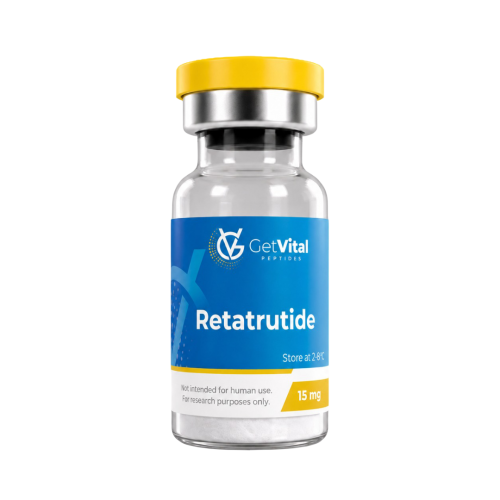
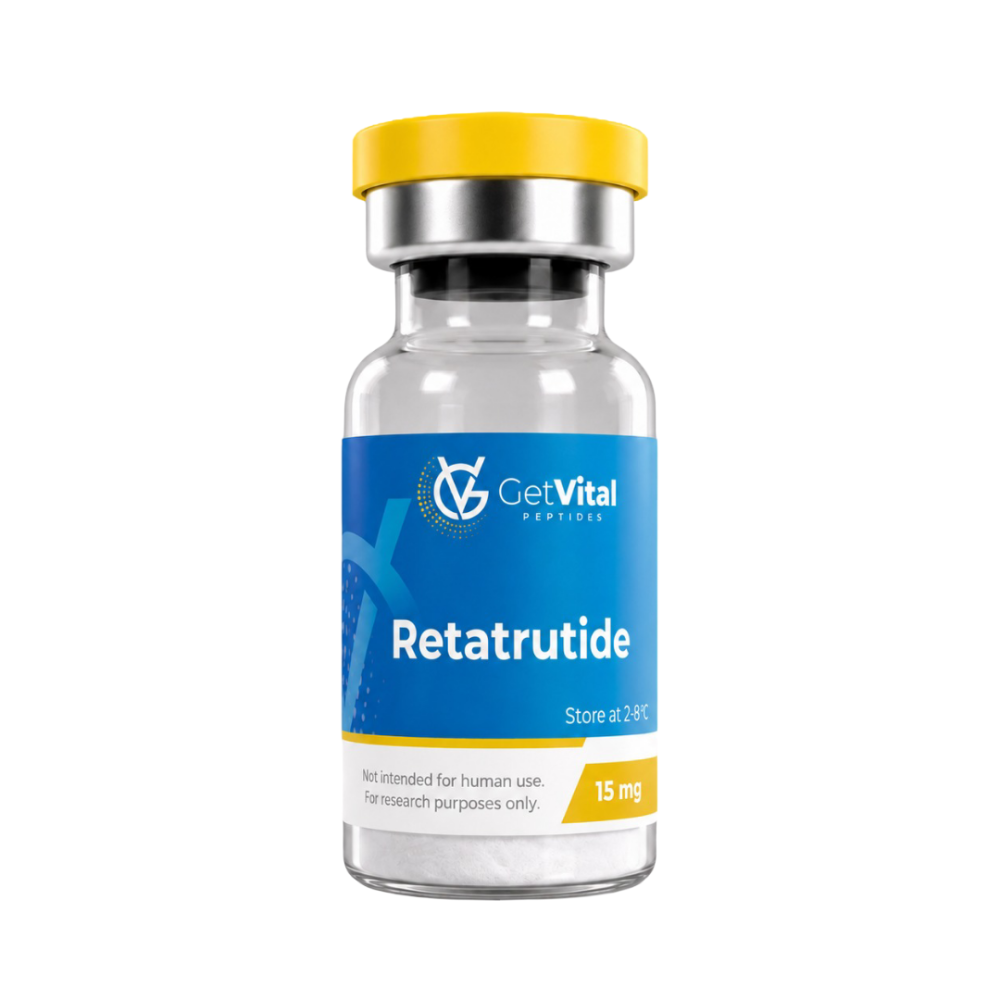
Retatrutide
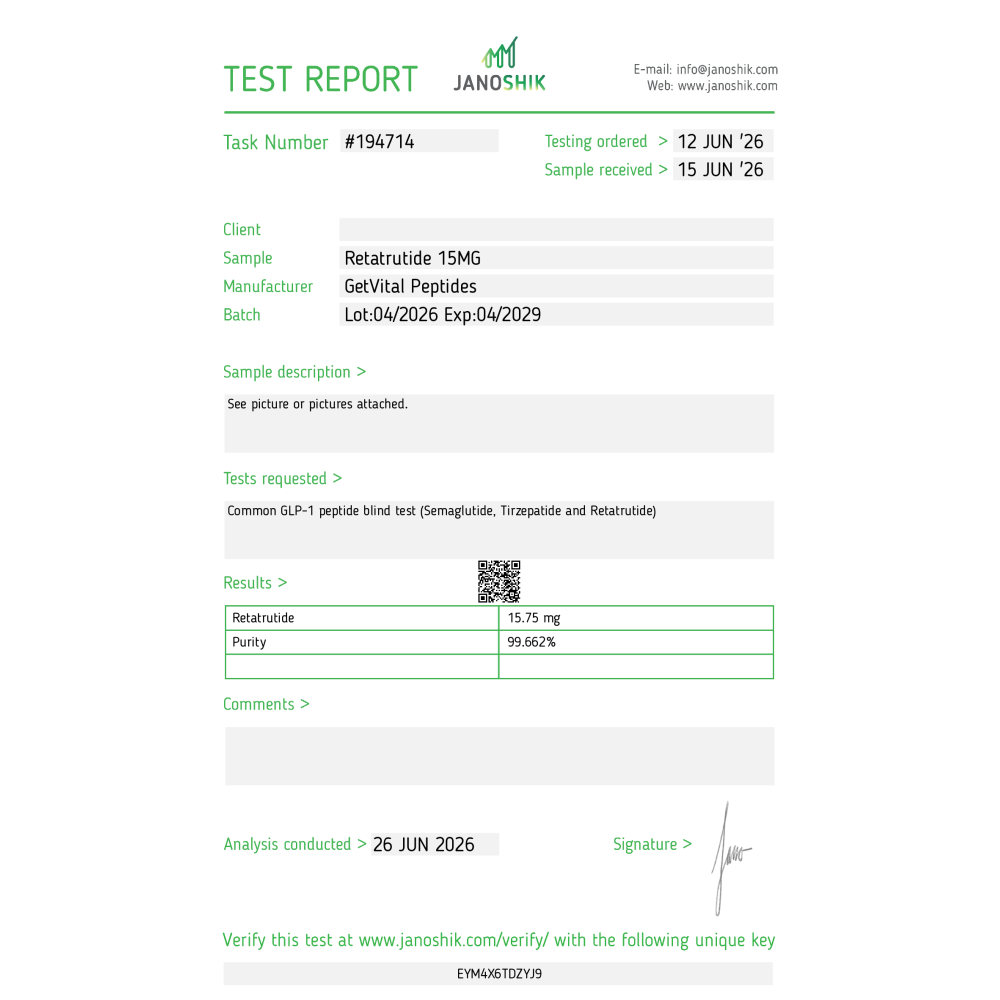
RETATRUTIDE 15MG
Manufacturer: GetVital
Package: 15 mg/vial
Common Names: Retatrutide, LY3437943, GIP/GLP-1/Glucagon Receptor Agonist, Triple Receptor Agonist
Info: Retatrutide is a synthetic peptide investigated for its activity at three metabolic hormone receptors: glucose-dependent insulinotropic polypeptide (GIP), glucagon-like peptide-1 (GLP-1), and glucagon receptors. This triple-receptor mechanism distinguishes retatrutide from compounds that target only one or two of these pathways and has made it an important subject of research involving glucose metabolism, appetite regulation, energy expenditure, body weight, and broader cardiometabolic function.
Effects
Metabolic Research: Retatrutide has been investigated for its ability to influence pathways involved in glucose regulation, insulin signaling, glucagon activity, and overall energy balance. Its combined receptor activity is of particular interest in research into metabolic health and glucose homeostasis.
Appetite and Energy Balance Research: GIP and GLP-1 signaling are involved in physiological mechanisms associated with appetite and satiety, while glucagon signaling is relevant to energy expenditure and nutrient metabolism. Retatrutide has therefore been studied in relation to food intake, appetite regulation, energy expenditure, and body-weight changes.
Body Composition and Cardiometabolic Research: Clinical research has evaluated retatrutide in relation to body weight, adipose tissue, glycemic parameters, insulin sensitivity, lipid metabolism, and other factors relevant to cardiometabolic health.
Dosage Range and Duration of Use
Retatrutide 15 mg (15 mg/vial): Each vial contains 15 mg of retatrutide in lyophilized form. Retatrutide remains an investigational compound and does not have an officially established or approved dosing regimen for routine clinical use.
However, clinical trial protocols evaluated once-weekly subcutaneous injections using a gradual dose-escalation schedule to improve tolerability and minimize gastrointestinal side effects. In clinical research settings, protocols typically initiate treatment at a low starting dose of 2 mg once weekly for Weeks 1-4, followed by stepwise increases every 4 weeks-escalating to 4 mg once weekly for Weeks 5-8, 8 mg once weekly for Weeks 9-2 (or intermediate steps such as 6 mg or 9 mg depending on the specific phase trial), up to a maximum maintenance dose of 12 mg once weekly.
Side Effects
Possible adverse effects observed during clinical investigation of retatrutide include nausea, vomiting, diarrhea, constipation, abdominal discomfort, decreased appetite, bloating, and indigestion. Gastrointestinal reactions may become more noticeable during periods of dose escalation.
Other reactions may occur depending on individual characteristics, exposure, dosage, and concomitant medications. Any significant or persistent adverse effects require appropriate medical evaluation.
Post-Cycle Therapy
Retatrutide is not an anabolic steroid, androgenic compound, or testosterone-suppressing anabolic agent. It therefore does not require conventional post-cycle therapy (PCT) protocols associated with anabolic steroid use. However, because retatrutide remains an investigational peptide, its use and discontinuation should be considered within an appropriate medical or research framework.
Storage:
Store lyophilized Retatrutide according to the manufacturer's storage specifications and protect the vial from excessive heat, moisture, and direct exposure to light. After reconstitution, storage requirements and stability may depend on the diluent, concentration, preparation method, and manufacturer's instructions.
Tags: Retatrutide, Retatrutide 15mg, LY3437943, Unique Pharma, Peptide, GIP Receptor Agonist, GLP-1 Receptor Agonist, Glucagon Receptor Agonist, Triple Receptor Agonist, Metabolic Research, Appetite Regulation, Energy Metabolism, Cardiometabolic Research, Body Composition Research